![Occupational safety clothing regulations [2025]: What employers and employees need to know](http://yoursafetyshop.com/cdn/shop/articles/Dapro-Navy-Rope-Access-Coverall-at-Work_1907e037-bca6-4e50-8c21-b41349bd8816.webp?v=1765797049&width=1500)
Workwear isn’t a fashion choice. It’s a safety measure. Yet there’s still a lot of confusion: when is workwear mandatory? And who pays for it, the employer or the employee? According to FNV occupational safety research, two out of ten workers don’t receive essential protective equipment like safety shoes or gloves, even though they should. This not only puts their health at risk, but it’s also a violation of the Dutch Working Conditions Act (Arbowet). Time to break down the rules for 2025.
Legal obligations for workwear
Under the Arbowet (Articles 3 and 8), employers must ensure the health and safety of their workers. This means they must provide appropriate workwear based on the workplace risk assessment. Employees must also be supplied with personal protective equipment (PPE), such as safety shoes, helmets and gloves, when necessary to protect them from hazards like chemicals or falling objects.
When is workwear mandatory?
Workwear is mandatory whenever the workplace poses risks to health or safety, such as hazardous substances, working at heights or unsafe environments. Employers must ensure that employees wear the right protective clothing.
1. Workwear in construction
Construction workers must wear safety gear to protect against dangers like falling objects and dust. Safety shoes with steel toecaps, helmets, safety glasses and hearing protection are required. Think of anti-slip safety shoes, protective helmets and respiratory masks when handling dust or fumes.
2. Workwear in healthcare
Hygiene is crucial in healthcare. Staff wear gowns, gloves, masks and safety glasses to prevent contamination. Examples include medical coats, disposable gloves and masks during procedures.
3. Workwear for hazardous substances and chemicals
When working with dangerous substances, chemical-resistant clothing and PPE are mandatory. These must comply with EN 13034. Examples include chemical-resistant coveralls, respirators for vapour protection and chemical gloves, especially in petrochemical environments.
4. Roadwork and traffic safety
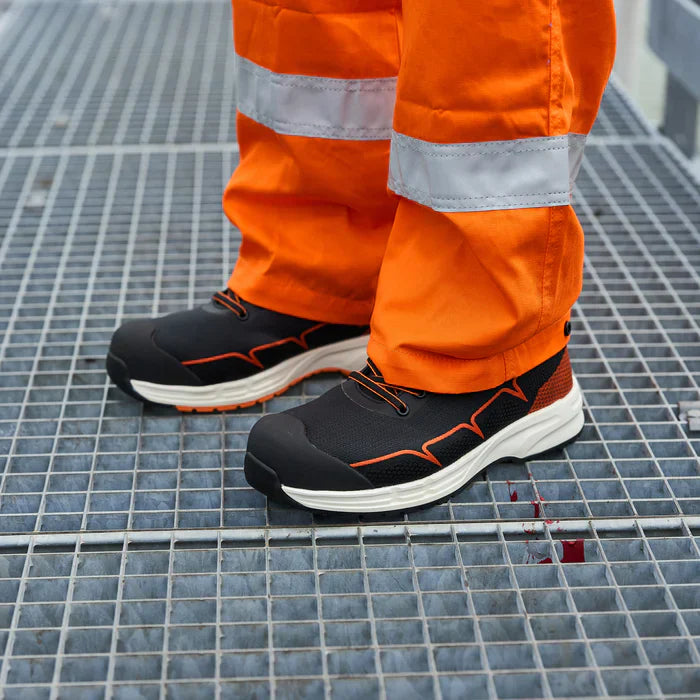
Reflective workwear is mandatory during roadworks to guarantee visibility. EN ISO 20471 requires reflective materials, with Class 2 or 3 for high-risk environments. Examples include bright orange jackets and safety vests with wide reflective stripes.
5. Safety vests
Safety vests must comply with EN ISO 20471, with Classes 1, 2 and 3 depending on the risk level. Class 3 is required along highways. Vests are also widely used in logistics and warehouses, where forklifts, tight spaces and low visibility increase risks.
Read more about PPE legislation.